President’s Memo: FCC Action Accelerates NEXTGEN TV Transition, Empowering Local Broadcasters

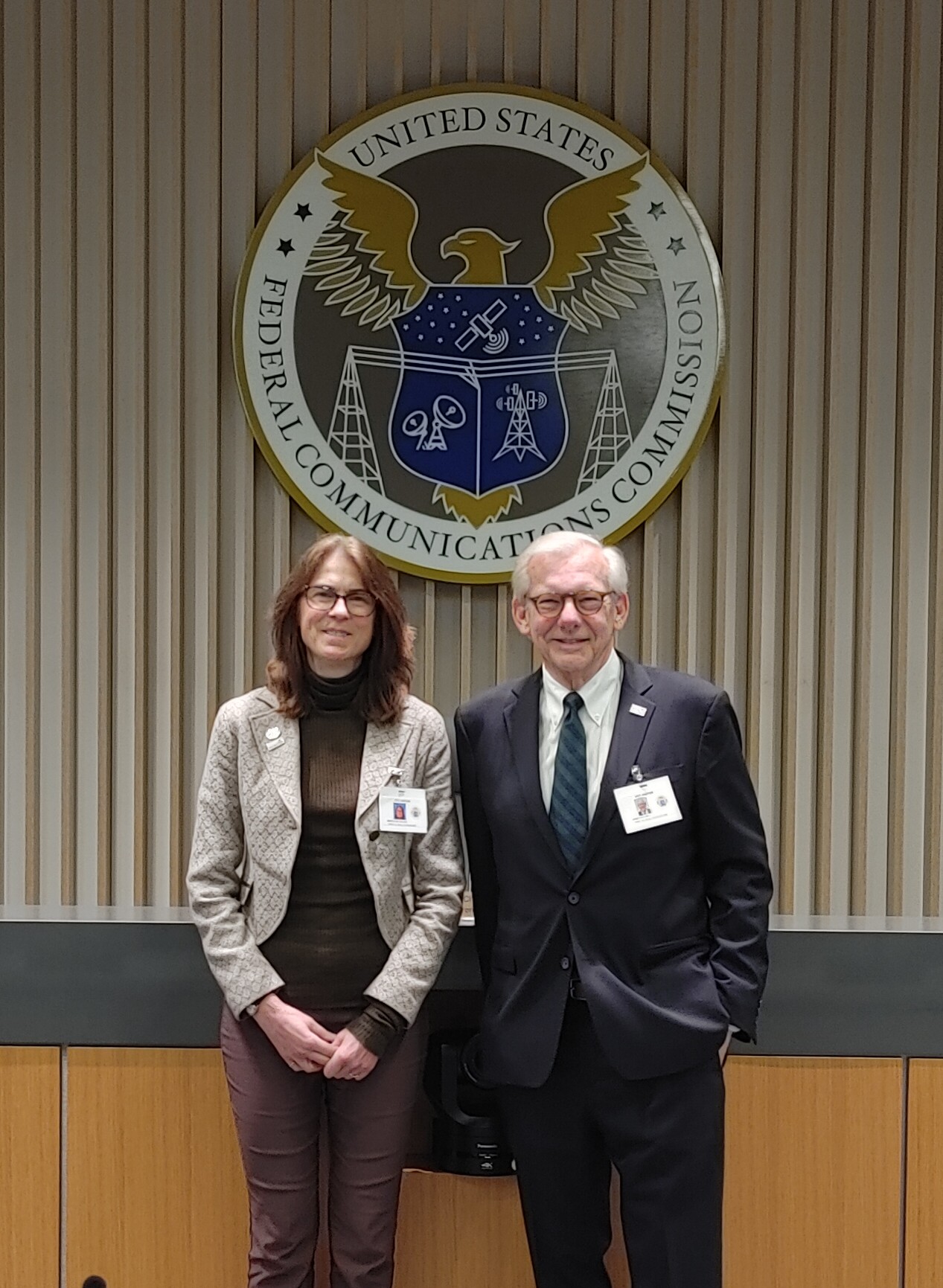
At the close of October, ATSC Board Chairman John Taylor and I had the privilege of attending the Federal Communications Commission’s Open Meeting in Washington, D.C., — a pivotal event for the broadcast community. The Commission’s unanimous vote to adopt a Further Notice of Proposed Rulemaking is a significant step forward to accelerate the U.S. transition to NEXTGEN TV powered by ATSC 3.0. As the standards organization behind the ATSC 3.0 platform, ATSC has provided technical background and context to the Commission, highlighting the interoperability, scalability, and international alignment that 3.0 offers.
FCC Chair Brendan Carr noted that the Notice proposes to eliminate mandatory simulcasting requirements, giving local broadcasters greater control over their conversion timelines and empowering them to tailor their transition strategies to community needs. Commissioner Anna Gomez emphasized that this transition to an IP-based format is essential to ensuring broadcasters remain competitive in today’s digital media landscape. Commissioner Olivia Trusty added a thoughtful reminder that even as we embrace new opportunities, the industry must keep the public interest at the heart of the transition.
The Commission cited ATSC 3.0’s potential to offer targeted emergency alerts, interactive programming, enhanced video and audio, and new IP-based services that strengthen local broadcasting’s relevance in a rapidly evolving media environment. The Rulemaking Notice is the beginning of a longer process by the FCC to establish final rules, which will likely cover a wide variety of transition issues.

In short, the FCC’s action represents both recognition of how far we’ve come — and a green light to continue moving forward. The NEXTGEN TV transition is not just about new technology; it’s about empowering local stations to innovate and serve their audiences in new ways.
On the international front, I joined ATSC members Indian Institute of Technology Bombay (IIT-Bombay) and EdgeBeam Wireless during the IEEE Future Networks World Forum on November 10-12 in Bengaluru, India, where an important technical tutorial explored how the convergence of 5G-Advanced (an evolution of 5G introduced in 3GPP Release 19 that enhances performance with AI, higher speeds, and greater reliability) and ATSC 3.0 can enable new use cases such as mobile data offload, unicast-multicast switching, and service continuity during mobility.
The well-received “Flexible Broadband Broadcast Convergence in 5G-Advanced and 6G” discussion described the ongoing Broadcast to Everything (B2X) project within ATSC, touching on the 3GPP Release 19 requirement for broadcast-broadband convergence, and recognizing that interworking with other systems is an important requirement for the Sixth Generation (6G) system as well. This work exemplifies how ATSC standards continue to evolve, ensuring that broadcasting remains at the forefront of innovation across communications ecosystems.
For more on the ongoing technical work behind the scenes, this month’s Standards Column offers a detailed look at recent developments within ATSC’s working.
As always, I extend sincere thanks to the ATSC community — our members, partners, and collaborators — for your continued dedication to advancing the art and science of broadcasting. Together, we’re shaping the future of broadcasting.
Madeleine Noland
President, ATSC
Posted in ATSC News
Subscribe to our Newsletter
Subscribe to The Standard, our monthly newsletter, to stay up-to-date with ATSC news and events around the world.