Someone You Should Know: Javier Ruano
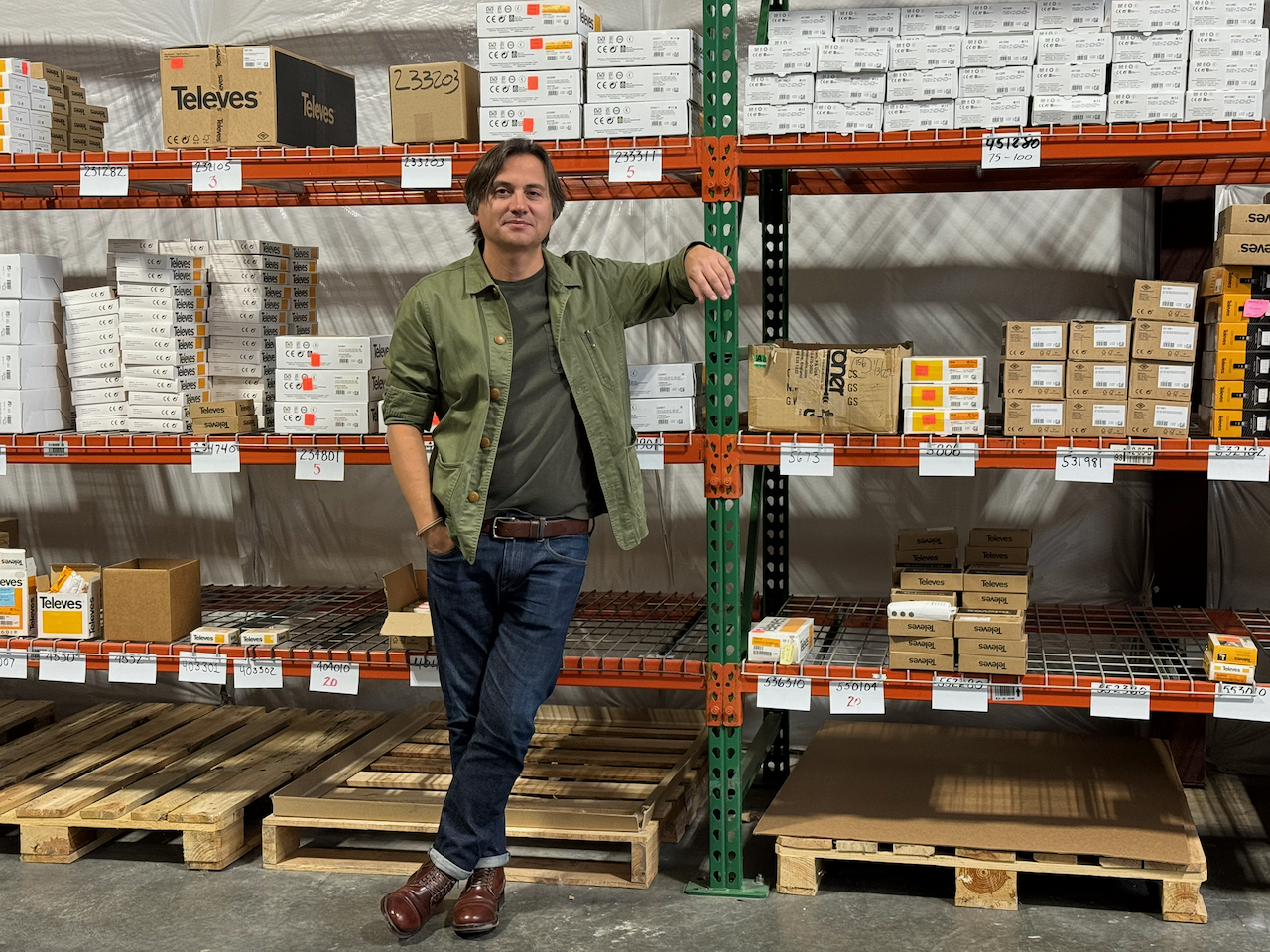
If you’ve spent any time around ATSC 3.0 conversations lately, especially where real-world deployment, reception, and long-term adoption are on the table, you’ve likely crossed paths with Javier Ruano. As President of Televes USA and a new member of the ATSC Board of Directors, Ruano brings a perspective shaped equally by engineering rigor, market realities, and a deep belief in broadcast television as a public service.
Ruano’s days rarely follow a script. Time zone differences mean early mornings or late nights on calls with Televes’ corporate team in Spain, with the hours in between filled by a fast-moving mix of sales, management, and technical discussions. One moment he may be talking antennas, RF distribution, or test and measurement; the next, optical fiber, data transport, or hospitality systems. His conversations span the entire ecosystem, from C-suite executives and engineers to integrators, broadcasters, MVPDs, retailers, and even end customers calling with reception questions.
Televes has been active in the U.S. since the late 1990s, but its involvement in the broadcast vertical accelerated alongside cord cutting and renewed interest in over-the-air television. Ruano’s personal entry point into ATSC 3.0 came through test and measurement, when Televes developed some of the first broadcast-grade ATSC 3.0 commissioning and monitoring solutions.
That work put him in close contact with broadcast groups during early deployments, leading to participation in the ATSC NextGen TV Conference and deeper engagement across the ecosystem. Over time, his focus expanded beyond products to adoption, reception quality, installer practices, and the viewer experience. That broader perspective ultimately led him to run for the ATSC Board on a platform centered on coordination, adoption, and the long-term viability of broadcast. He was elected in 2025 and now serves alongside his active participation in multiple ATSC groups, including the Business Advisory Council, TG3, TG3/S32 Physical Layer, and Global Recognition of ATSC 3.0.
What excites Ruano most about ATSC 3.0 is its potential to secure broadcast television’s future as a universal public service. “Broadcast remains one of the very few platforms that is truly free, resilient, and available to everyone,” he notes. ATSC 3.0, in his view, provides the tools to modernize broadcast while enabling new services, business models, and public safety capabilities that can sustain the ecosystem long term. Drawing from mature European DTT markets and transitions like TV 3.0 in Brazil, Ruano emphasizes that success hinges on coordination. When broadcasters, manufacturers, installers, retailers, and regulators move together, technology becomes adoption.
 Ruano’s journey to the U.S. began in 2010, when Televes sent him to Denver to manage the U.S. subsidiary. He and his wife Marilin moved their young family across the Atlantic, along with a one-month-old baby, embracing both excitement and uncertainty. Today, their daughter Candela is studying Aerospace Engineering in college, while their son Noah is a high-achieving high school student and standout soccer player. Living in Colorado means skiing when schedules allow, though competitive sports increasingly win that battle.
Music has also been a constant through Ruano’s life. In a previous chapter, he played in a band that released three albums and toured across Europe, where they made no money, but had a great time. These days, his collection of guitars may be larger than necessary, but he still enjoys picking one up whenever he can. At home, the family is happily overseen by Summer, a very spoiled Shih Tzu who is convinced she’s in charge.
 Ruano’s current reading stack includes How Music Works by David Byrne, Paula by Isabel Allende, Genesis by Eric Schmidt, and the ever-in-progress The Beauty of the ‘Burst. When it’s time to unwind, The Wire tops his all-time binge list, with Twin Peaks and the original The Twilight Zone close behind, and The X-Files ranking high in the guilty-pleasure department.
Asked about an alternative career, Ruano doesn’t hesitate: music. Architecture was also a strong pull coming out of high school, but Telecommunications Engineering ultimately won out for practical reasons. Still, one suspects that the creativity and structure of both paths have found their way into how he approaches the future of broadcast.
For ATSC and the broader NextGen TV community, that blend of technical grounding, ecosystem thinking, and human perspective makes Javier Ruano someone you really should know.
Posted in ATSC News
Subscribe to our Newsletter
Subscribe to The Standard, our monthly newsletter, to stay up-to-date with ATSC news and events around the world.